Showing posts sorted by date for query 1972. Sort by relevance Show all posts

Monday, 14 August 2017

1 9 7 0 review


1970 best-selling singles in Brazil  

there's a dearth of data from January to March 1970; 
complete information only from April to December 1970.

Singles with most weeks at the #1 position:

1. Adeus solidão (Picking up pebbles) - Carmen Silva (RCA) 14 wks at #1
2. Quero voltar p'ra Bahia - Paulo Diniz (Odeon) 12 wks at #1
3. Venus - The Shocking Blue (Polydor) 9 wks at #1
4. Eu te amo meu Brasil - Os Incriveis (RCA) 8 wks at #1 
5. Everybody's talkin' - Nilsson (RCA) 5 wks at #1

6. Marie Jolie - Aphrodite's Child (Mercury) 5 wks at #1
7. Yellow River - Christie (Epic) 4 wks at #1
8. Airport Love Theme - Vincent Bell (MCA-Chantecler) 4 wks at #1
9. A namorada que sonhei - Nilton Cesar (RCA) 2 wks at #1
10. P'ra frente Brasil - Coral de Joab Teixeira (Copacabana) 2 wks at #1

11. 120... 150... 200 km por hora - Roberto Carlos (CBS) 2 wks at #1
12. Hoje - Taiguara (Odeon) 2 wks at #1 
13. Reflections of my life - The Marmalade (Odeon) 2 wks at #1
14. Primavera (Vai chuva) - Tim Maia (Polydor) 2 wks at #1
15. Se eu pudesse conversar com Deus - Antonio Marcos (RCA) 1 wk at #1

16. Yester-me, yester-you, yester-day - Stevie Wonder (Tamla-Ebrau)
17. Pensando em você - Wanderley Cardoso (Copacabana) 
18. Cherry red - The Bee Gees (Polydor) 
19. Candida - Dawn (Bell-Odeon) 

'Amiga', a TV guide published in Rio by weekly illustrated Manchete started carrying lists of Best Selling Records according to a research done by a 'A Grande Parada Brasil' (Brazil's Great Parade) a radio-show broadcast from São Paulo on Saturdays from 12:00 AM to 2:00 PM. The radio-programme was produced by Waldyr Santos and compered by Enzo de Almeida Passos who linked up with various DJs from different radio stations from capital cities around the country.

The Military Junta that had overthrown democratic elected President João Goulart 6 years before (1st April 1964) had consolidated its power through a series of arbitrary Acts - AI-5 imposed on the country in December 1968 being the most infamous - had a heavy-handed censorship imposed on all kinds of arts - especially the music business. 

The Brazilian national football-team won FIFA's World Cup in Mexico in June 1970 spawning a few march-like hits like Coral de Joab's 'P'ra frente Brasil' (Foward Brazil), Titulares do Ritmo's 'A Taça do Mundo é Nossa' (The World Cup is Ours) and Wilson Simonal's 'Aqui é o pais do futebol' (Here is football's country). The Military Junta took advantage of national jubilation over the football victory to press their own agenda emphasizing a fascist nationalism and introducing a negative campaign copied from a USA's earlier campaign: 'America, love it or leave it', which rhymes in English but it is poorly phrased in Portuguese: 'Brasil, ame-o ou deixe-o!'

Juca Chaves had started as an 'enfant terrible' in 1960. He had lived in exile in Rome and Paris as of 1963 but was now back in the country with a full swing. He released 'Paris tropical' (Paris in the tropics) in defiance of the general truculent nationalistic mood, sending up Jorge Ben's 1969's # 1 hit 'País tropical' (Tropical country) a jingoist view of the country that ran according to the General's 'official view'.

Rock band Os Incríveis would take 'Eu te amo meu Brasil' (I love you, my dear Brazil) to #1 by December, crowning 1970 as probably the most jingoistic year in Brazil's recent tragic history. Actually 'Eu te amo meu Brasil' was a paen extolling the natural beauties of the country and not an overall piece of political propaganda... but it unfortunately ended up working as probably not intended.  

Quite a few artists had left the country going into exile due to political pressure coming from the Dictatorship. Chico Buarque de Hollanda thought it might be safer to live in Rome after the theatre in which his play 'Roda Viva' was playing was invaded by an anti-communist para-military group that bashed up actors and destroyed property. Caetano Veloso & Gilberto Gil left for London in 1969, after having been held illegally by the Military and submitted to mental and physical torture.

Paulo Diniz's 'Quero voltar p'ra Bahia' (I want to go back to Bahia) was the second-biggest hit of the year. Diniz who had had a medium-sized hit for Copacabana before that had got hold of a phrase Caetano Veloso had written from London - to independent weekly 'O Pasquim' and made it into a refrain (I don't want to stay here, I want to go back to Bahia) which became 'Quero voltar p'ra Bahia' and shot to #1 almost immediately after being released by Odeon.

Gal Costa went up the charts with Caetano Veloso's 'London, London', his first attempt at writing in English which is about the city where he was in exile.

Chico Buarque de Hollanda had a hit with 'Essa moça tá diferente' (This girl's changed) released by Dutch Philips, his new label after having left local RGE.

Paulinho da Viola with his beautiful 'Foi um rio que passou em minha vida' (It was like a river that passed through my life) had finally arrived in grand style. Taiguara, who was born in Uruguay but moved to Brazil very young  was another welcome breath of fresh air. Taiguara's 'Hoje' (Today) had a most exquisite arrangement made by Lindolpho Gaya and Taiguara's eerie lyrics were deep and mysterious. He would release an album before the end of the year with 'Viagem' and 'Universo no teu corpo' that could be considered part of a trilogy along with 'Hoje'.

Rio de Janeiro's vocal group Golden Boys had a very good year with 'Fumacê' (A lot of smoke) a pro-marijuana song even though it was properly disguised as something else. 'Cabeção' their second hit was a tongue-in-cheek or simply a politically-incorrect song about a fellow with a big head.

By November, Tim Maia a new act hailing from Rio de Janeiro took 'Primavera' (Vai chuva) to #1 in the singles' chart. Tim had started singing with the same Tijuca crowd that had been on top now for more than 5 years namely Roberto Carlos, Erasmo Carlos, Jorge Ben and Wilson Simonal. Tim instead migrated to the USA where he was influenced by American Black music. Tim Maia's album was a breakthrough for what would be soon called Brazilian Soul Music.

The first half of the year saw Carmen Costa and her 'Adeus solidão' on the top of the charts for 9 consecutive weeks making it the best-selling-single of 1970. Adapted from 'Picking up pebbles' a ballad written by British Johnny Curtis, that was a #1  hit in Australia by Matt Flinders and a #1 hit in South Africa and Rhodesia by Cornelia.

On the foreign-language songs department we had more of the same. We started the year with two blockbusters: B.J.Thomas' 'Raindrops keep fallin' on my head' from 'Butch Cassidy & the Sundance Kid' and Nilsson's 'Everybody's talkin' from 'Midnight cowboy' that was huge. Both flicks had sound-track albums that sold in the thousands. 'Venus' by Dutch band Shocking Blue was probably the best-selling-single-of-the-year but as we don't have the charts for the first 3 months of 1970 it is not possible to be sure of that. 

In August, session musician Vincent Bell took 'Airport Love Theme' (from a popular movie based on Arthur Hayle's book) to #1.Bell had played as a session-men for years (he played in The Lemon Pipers' 'Green tambourine' #1 at Billboard on 3 February 1968). Bell developed a 'watery' guitar sound with his 12-string guitar that amazed people making his 'Airport Love Theme' go to the top of the charts.  

'Let it be' was The Beatles farewell song. But even before 'Let it be' hit the radio-waves John Lennon placed his own powerful 'Instant Karma' at the charts being the first Beatle to hit individually. 

'The boxer' was Simon & Garfunkel's biggest hit so far. The American duo would also chart with 'Cecilia' and 'El condor pasa' from their album 'Bridge over troubled water'. 

British-Australian band The Bee Gees kept churning out hit after hit; 'Cherry red' being on the top of the charts for one week.

Greek outfit Aphrodite's Child was #1 for 4 weeks with 'Marie Jolie'. Demis Roussos, their crooner, would soon leave the combo to start a victorious solo career.

Creedence Clearwater Revival were the 2nd most-popular foreign band in Brazil having placed two songs in the charts: the anti-war ditty 'Who'll stop the rain' and 'Travellin' band'.

Military Dictatorship, TV Globo & the demisse of pop-music festivals

Pop music festivals organized by TV stations started in 1965. Soon they became really popular having hit their peak in 1967. But now, due to the censorship imposed by the Military Dictatorship those festivals were fast becoming redundant. 

Since 1964, there had been a change of media ownership in the country. Independent TV Excelsior which had single-handedly revolutionized the way of making TV in Brazil was put 'on ice' by the Dictators and conservative and anti-communist newspaper O Globo was anointed by the Junta and given a TV concession (TV Globo) to what would soon become a monopoly on communications in the country.

TV Globo took up pop-music festivals that up until then had been TV Record's trump and kept on organizing them in Rio de Janeiro. Up until 1968, São Paulo had been the place where those festivals happened. Now, new TV Globo with a fresh influx of capital from Time-Life Inc. ruled the waves.

Due to the Junta's censorship to all kinds of media their raison d'etre no longer existed. How could a song festival be successfull if song-writers could not say what they wanted? 1970 saw the last of such events, even though there were 2 further editions in 1971 and 1972, but they were lacklustre affairs and died of natural causes.

The 1970 edition of the so-called V FIC - 5th International Song Festival - showed all the contradictions of a police-state. As the organizers tried to 'clean' song lyrics of all social protest they became bland and boring. The winning song 'BR-3' written by Antonio Adolfo & Tiberio Gaspar was bland enough to get the go-ahead from the organizers. It was a story about people dying during car crashes on BR-3 a highway linking Rio de Janeiro and Minas Gerais. The song itself was insipid but it was sung in a forceful way by Toni Tornado, a Black singer sporting a huge Afro-hair which in itself was not viewed favourably the Military, especially now that the US Black Panther movement was on the go.

Erlon Chaves, a Black orchestra-conductor who had always been friendly with the conservative side of politics was in for a shock when after performing his entry 'Eu também quero mocotó' he was summoned by a para-military court, imprisoned and given the runaround because he had the nerve to be kissed and hugged by two blondes on the stage as part of his show. Erlon who was naive politically learned the hard way: it was not enough to be 'anti-communist' in Brazil; one had to be white too! Erlon Chaves who had been the highlight of the 1970 Festival went into instant ostracism and died of a heart attack (or a broken-heart) 4 years later.

Paul Simon's wife had been harassed by Brazilian police as she arrived at Rio Airport for wearing a T-shirt with Mao Tse Tung on it. Even with all this repression, 'Pedro Nadie' (Peter Nobody), the story of common man that could be interpreted as being left-wing, written and performed by Argentine Piero won the Festival on 27 October 1970.

Manchete weekly illustrated magazine: Italian born Argentine Piero De Benedictis wins the International Song Festival in Rio de Janeiro on 27 October 1970. Piero is lifted on his peers' shoulders while receiving a standing ovation from the crowd that filled Maracanãzinho arena.  

read more about this Festival at:
http://festivalesdempb.blogspot.com.br/2011/01/1970-v-festival-internacional-da-cancao.html

18 October 1970 (National final)
25 October 1970 (International final)

1. BR-3 (Adolfo-Gaspar) Tony Tornado & Trio Ternura
2. O amor é meu país (Lins-Souza) Ivan Lins
3. Encouraçado (Costa-Lemos) Fabio
4. Um abraço terno em você, viu mãe? Luiz Gonzaga Jr.
5. Abolição 1860-1980 (Salvador-Medeiros) Dom Salvador

6. Eu também quero mocotó (Jorge Ben) Erlon Chaves & Banda Veneno
7. Meu laiaraiá - Martinho da Vila
8. Universo no teu corpo - Taiguara
9. Tributo ao sorriso - O Terço
10. Coisa e tal - O Grupo

11. A charanga - Wanderléa
12. Namorada - Antonio Marcos & Vanusa

Saturday, 8 July 2017

1971 October - 'Love story' / ZéDi

Marcio Greyck, who had been on the road since 1967 (see below), finally makes it to the top of the charts in September 1971, with self-penned 'Impossível acreditar que perdi você' (It's unbelievable to realize I've lost you). Greyck followed it up with similar ballads but none as powerful as this one.
a very young Marcio Greyck in earlier times, 1967. Sétimo Céu magazine.


5 October 1971 - Amiga n. 72 

1. Impossivel acreditar que perdi você - Marcio Greyck (CBS) (4)
2. Oh me oh my - B.J. Thomas (Scepter-Top-Tape)
3. Amada amante - Roberto Carlos (CBS)
4. It's too late - Carole King (Ode-A&M-Odeon)
5. Fire and rain - James Taylor (WB-Philips)

6. Barbarella - Archaeopterix (CID) 
7. If - Bread (Elektra-Philips) 
8. Quem mandou você errar? - Claudia Barroso (Continental)
9. Sweet hitch-hiker - Creedence Clearwater Revival (Liberty-RCA)
10. Independência ou morte - Zedi (Tapecar)

11. Have you ever seen the rain? – Creedence Clearwater Revival (Liberty-RCA)
12. Be my baby - Cissy Houston (Janus-Top-Tape) 
13. Funny funny – The Sweet Set ()
14. Oho oha – Los Angeles (Hispa-Vox-Continental)
15. Rainy days and Mondays - Carpenters (A&M-Odeon)

16. Sticky - Alacran (Epic-CBS)
17. Love story – Andy Williams (CBS)
18. Minha história (Gesubambino)  – Chico Buarque de Hollanda (Elenco-Philips)
19. That’s what I want – Square Set (Epic-CBS)
20. It don’t come easy – Ringo Starr (Apple)
Chico Buarque who had his 'Apesar de você' banned by the Military Junta that governed Brazil came back now with 'Minha história' a translation of Lucio Dalla's 'Gesubambino' (Baby Jesus). The story of a woman who had been seduced by a sailor in a port-town and gives birth to a boy who she calls 'Baby Jesus'.

'Impossível acreditar que perdi você', com Márcio Greyck lidera durante 3 semanas a parada, agora seguida de perto por 'Oh me oh my', com B.J. Thomas, que passou para o 2o. lugar. 'Amada amante' com Roberto Carlos desceu para 3a. colocação. 

Extended-plays (compactos-duplos)

1. Amada amante - Roberto Carlos (CBS) 
2. De tanto amor - Claudette Soares (Philips)
3. Love story - Francis Lai (Paramount-RGE)
4. Ave Maria no morro - Eduardo Araujo (Odeon)
5. Love story - Johnny Mathis (CBS)  

6. Na galha do cajueiro - Wilson Simonal (Odeon)  
7. Friends - Elton John (Paramount-Young-RGE) 
8. Super Erótica - Os Carbonos (Beverly) 
9. I put a spell on you - Creedence Clearwater Revival (Liberty-RCA) 
10. Mar de rosas (Rose garden) - Celly Campello (Continental)
Celly Campello, former Brazilian Queen of Rock returns to the charts after an absence of 9 years singing 'Mar de rosas', a cover of Lynn Anderson's 'Rose garden'. Campello would never catch up with the times anymore. Nine years is an eternity in show business.

Albums (long-plays)

1. As 14 Mais vol. 25 - various artists (CBS)
2. Love story - Johnny Mathis (CBS)
3. Love story sound-track - Francis Lai (Paramount-RGE)
4. Mar de rosas - The Fevers (London)
5. Pendulum - Creedence Clearwater Revival (Liberty-RCA)

6. O cafona (Internacional) - various foreign songs (Sigla-Som-Livre)
7. Salve, salve brasileiro - Eduardo Araujo (Odeon)
8. Clara Nunes (Odeon)
9. Sinfonias - Waldo de los Rios (Hispa-Vox-Continental)
10. Where I'm coming from - Stevie Wonder (Tamla-Tapecar)

5 October 1971 - songs with most air-play on the radio around the country: Radio Tupi de Sao Paulo (Luiz Aguiar); Radio Cultura BH-MG (Geraldo Ferreira); Radio Continental de Recife-PE (Mario Silva); Radio Farroupilha de Porto Alegre (Homero Coimbra); Radio Piratininga de S.Paulo (Sandro Vilar) and Radio Bahia de Salvador (Valdir Serrão). 

1. Amada amante - Roberto Carlos (CBS)
2. Impossivel acreditar que perdi você - Marcio Greyck (CBS)
3. Menina da ladeira - João Só (Odeon)
4. If - Bread (Elektra-Philips)
5. Oh me oh my - B.J. Thomas (Scepter-Top-Tape)

6. Minha história (Gesubambino) - Chico Buarque de Hollanda (Philips)
7. Independência ou morte - Zedi (Tapecar)
8. Here comes that rainy-day feeling again - The Fortunes (Philips)
9. 16 toneladas - Noriel Vilela (Copacabana)
10. It's too late - Carole King (Ode-A&M-Odeon) 

11. O que é que houve? - Gutemberg Guarabira 
12. De tanto amor - Claudette Soares (Philips)
13. Love story - Johnny Mathis (CBS)
14. Salve, salve brasileiro - Eduardo Araujo (Odeon)
15. Ouriço - Wilson Simonal (Odeon) 

12 October 1971 - Amiga n. 73 

1. Impossivel acreditar que perdi você - Marcio Greyck (CBS) (5)
2. Amada amante - Roberto Carlos (CBS) 
3. Oh me oh my - B.J. Thomas (Scepter-Top-Tape)
4. Fire and rain - James Taylor (WB-Philips)
5. It's too late - Carole King (Ode-A&M-Odeon) 

6. If - Bread (Elektra-Philips)
7. Sweet hitch-hiker - Creedence Clearwater Revival (Liberty-RCA)
8. Independência ou morte - Zedi (Tapecar)
9. Barbarella - Archeopterix (Kuckuck-Cid-Discos)
10. Quem mandou você errar? - Claudia de Barros (Continental)

11. Have you ever seen the rain? – Creedence Clearwater Revival (Liberty-RCA)
12. Oho aha - Los Angeles (Hispa-Vox-Continental) 
13. Funny, funny – The Sweet Set
14. Le rois mages - Sheila (Sigla)
15. Minha história (Gesubambino) – Chico Buarque (Elenco-Philips)

16. Rainy days and Mondays - Carpenters (A&M-Odeon) 
17. Acapulco gold – Mason-Dixon (Jubilee-Top Tape)
18. Sticky - Alacran (Epic-CBS)
19. Be my baby – Cissy Houston (Janus-Top Tape)
20. Where do I begin? (Love story) – Andy Williams (CBS)
German band Archaeopterix reach Top 10 with 'Barbarella' recorded originally for Kuckuck; it got to these shores through Red Bird Records (God only knows what that label was) and was pressed in Brazil by Cid Discos.
'Acapulco gold'  by Mason-Dixon and Sheila's 'Le rois mage' played on the sound-track of TV novela 'O Cafona'.
New Records was a new label which was an off-shoot of Beverly Records which in its turn was an off-shoot of Copacabana Discos. Super Erótica was played by rock-band Os Carbonos whose after-production layed a track of heavy-breathing on top of it to give it a sense of fucking-while-you-play.

Extended-plays (compactos-duplos) 

1. Amada amante - Roberto Carlos (CBS)
2. De tanto amor - Claudette Soares (Philips)
3. Love story - Francis Lai (Paramount-RGE)
4. Love story - Johnny Mathis (CBS) 
5. Ave Maria no morro - Eduardo Araujo (Odeon) 

6. Super Erótica - Os Carbonos (New Records-Beverly) 
7. Na galha do cajueiro - Wilson Simonal (Odeon) 
8. Friends - Elton John (Paramount-Young-RGE)
9. The end - Earl Grant (Decca-Chantecler) 
10. I put a spell on you - Creedence Clearwater Revival (Liberty-RCA) 

Albums (long-plays)

1. O cafona (Internacional) - various novela songs (Sigla-Som Livre)
2. As 14 Mais vol. 25 - various Brazilian artists (CBS)
3. Love story - Johnny Mathis (CBS)
4. Love story sound-track - Francis Lai (Paramount-RGE)
5. Pendulum - Creedence Clearwater Revival (Liberty-RCA)

6. Mar de rosas - The Fevers (London)
7. Manna (incluindo 'If' - Bread (Elektra-Philips) 
8. Sinfonias - Waldo de los Rios (Hispa-Vox-Continental)
9. Salve, salve, brasileiro - Eduardo Araujo (Odeon)
10. I put a spell on you - Creedence Clearwater Revival (Liberty-RCA)
'O cafona' (International) was the 1st time TV Globo released an album with only foreign-hits that were incidental music to their tele-novela-dramas; Liberty-RCA releases 'I put a spell on you', Creedence Clearwater Revival's first ever album, originally released in the USA in 1968.

12 October 1971 - songs with most air-play on the radio around the country: Radio Tupi S.Paulo (Batista Linardi); Radio Mineira BH-MG (Marco Aurelio Senra); Radio Metropolis de Porto Alegre (Ivo Gomes); Radio Clube de Recife-PE (Rosa Maria); Radio Universo de Curitiba (Pirajá Ferreira) and Radio Globo do Rio de Janeiro-GB (Mario Luiz). 

1. De tanto amor - Claudette Soares (Philips) 
2. Amada amante - Roberto Carlos (CBS)
3. Oh me oh my - B.J. Thomas (Scepter-Top-Tape)
4. Go away little girl - Donny Osmond (MGM-Philips)
5. De noite na cama - Erasmo Carlos (Philips)

6. Goodbye media man - Tom Fogerty (Liberty-RCA) 
7. Independência ou morte - Zedi (Tapecar)
8. Bangla-desh - George Harrison (Apple-Odeon)
9. Sea cruise - Johnny Rivers (Liberty-RCA)
10. You'll notice me - Terry Winter (New Records-Beverly) 

11. Let it be - The Mohawks   
12. Fire and rain - James Taylor (WB-Philips) 
13. It's too late - Carole King (Ode-A&M-Odeon)
14. Here comes that rainy-day feeling again - The Fortunes (Philips)
15. A voz do povo - Waldik Soriano (Continental)

16. Sweet hitch-hiker - Creedence Clearwater Revival (Liberty-RCA)
17. It don't come easy - Ringo Starr (Apple-Odeon)
18. Another day - Paul McCartney (Apple-Odeon)
19. Sem destino - Antonio Marcos (RCA)
20. Quem mandou você errar? - Claudia Barroso (Continental)   
The Mohawks' reggae version of The Beatles' 'Let it be'; Brazilians loved Creedence Clearwater Revival which was surely the most popular foreign band after The Beatles. When Tom Fogerty left CCR, Brazilians did again what they had done with the Beatles' members individually: they went out and bought Tom's record too.
Erasmo Carlos changed record-label going from RGE to Philips and changed his repertoire as well recording a Caetano Veloso tune called 'De noite na cama' (In bed at night).
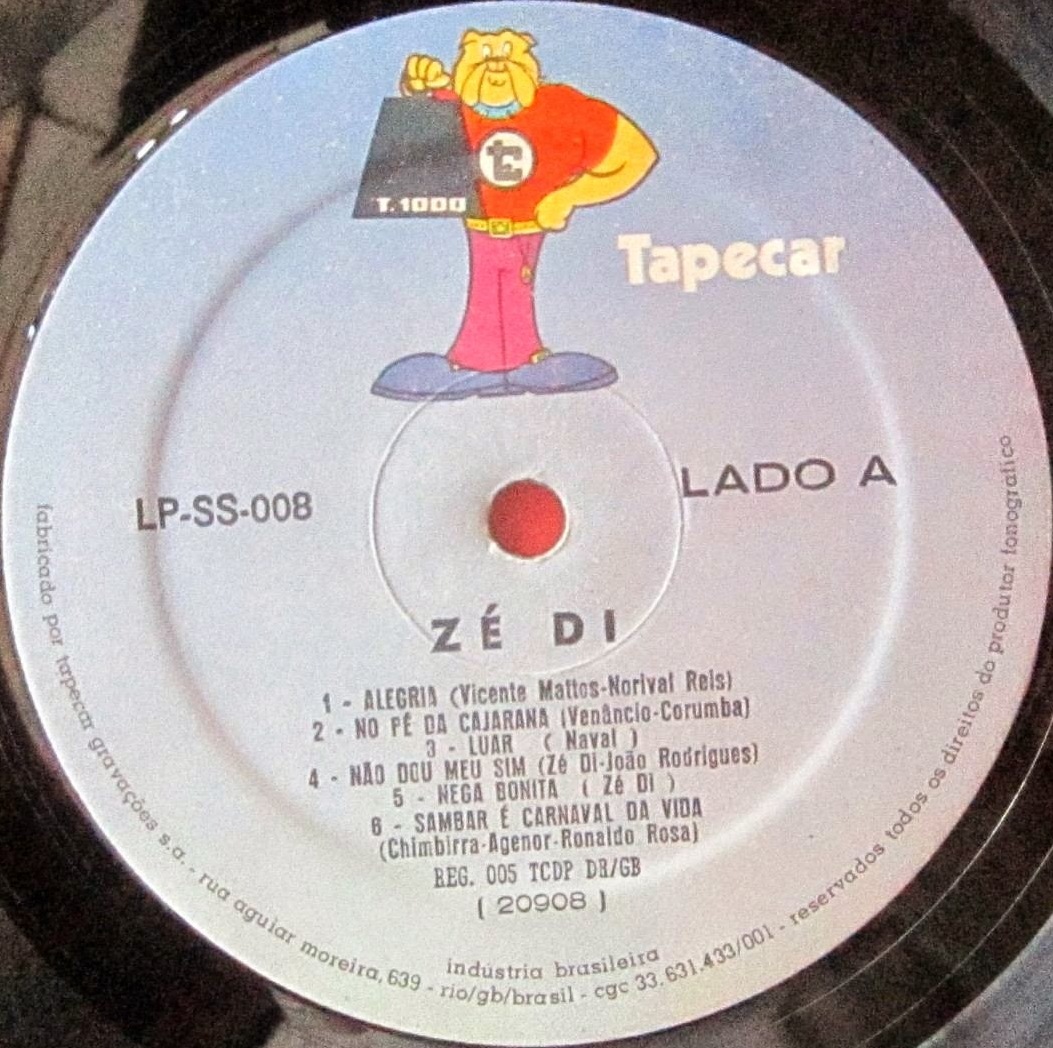
'Independência ou morte' (Independence or death) penned by Zédi was presented as São Paulo's Vai-Vai's 'samba-enrêdo' at Carnaval time. Zédi (José Dias) - born in Mogi Mirim-SP on 6 April 1936 - recorded it for Rio's label Tapecar and became a national hit. Zédi went on to record a few albums for Tapecar.

26 October 1971 - Amiga n. 75 

1. Amada amante - Roberto Carlos (CBS) (1) 
2. Oh me oh my - B.J. Thomas (Scepter-Top-Tape) 
3. Impossivel acreditar que perdi você - Marcio Greyck (CBS) 
4. Fire and rain - James Taylor (WB-Philips)
5. Acapulco gold - Mason Dixon (Jubilee-Top-Tape) 

6. Independência ou morte - Zédi (Tapecar)
7. It's too late - Carole King (Ode-A&M-Odeon)
8. Have you ever seen the rain? - Creedence Clearwater Revival (Liberty-RCA) 
9. Co-co - The Sweet (RCA)
10. If - Bread (Elektra-Philips) 

11. Rainy days and Mondays - Carpenters (A&M-Odeon)
12. Sweet hitch-hier - Creedence Clearwater Revival (Liberty-RCA)
13. Oho aha – Los Angeles (Hispa-Vox-Continental)
14. Barbarella – Archaeopterix (Red Bird Records-Cid Discos)
15. Izabela – Renato & seus Blue Caps (CBS)

16. Minha história (Gesubambino) – Chico Buarque (Elenco-Philips)
17. Les rois mages - Sheila (Sigla-Som-Livre)
18. Quem mandou você errar – Cláudia Barroso (Continental)
19. You’ve got a friend – James Taylor (WB-Philips)
20. How can you mend a broken heart? – Bee Gees (Polydor)

Extended-plays (compactos-duplos) 

1. Amada amante - Roberto Carlos (CBS)  
2. Evie - Johnny Mathis (CBS) 
3. Love story - Johnny Mathis (CBS)
4. De tanto amor - Claudette Soares (Philips)
5. Ave Maria no morro - Eduardo Araujo (Odeon)

6. Super Erótica - Os Carbonos (New Records-Beverly)
7. Love story - Francis Lai (Paramount-RGE)
8. The end - Earl Grant (Decca-Chantecler)
9. Quem mandou você errar? - Claudia Barroso (Continental)
10. Friends - Elton John (Paramount-Young-RGE)

Albums (long-plays)

1. Love story - Johnny Mathis (CBS)
2. O cafona (Internacional) - various foreign hits (Sigla-Som-Livre)
3. As 14 Mais vol. 25 - various Brazilian artists (CBS)
4. Salve, salve brasileiro - Eduardo Araujo (Odeon)
5. Mar de rosas - The Fevers (London)

6. Só o amor contrói - Wanderley Cardoso (Copacabana)
7. Love story sound-track - Francis Lai (Paramount-RGE)
8. Pendulum - Creedence Clearwater Revival (Liberty-RCA)
9. Clara Nunes (Odeon)
10. If - Bread (Elektra-Philips)   

'Evie' com Johnny Mathis pulou da 7ª. para a 2ª. colocação. Nos LPs, 'Love story' passa à liderança deslocando 'O cafona' (Internacional).
'Minha doce namorada' a novela that ran from April 1971 up to January 1972 had a Brazilian sound-track which didn't spawn any single. The international album had Terry Winter's 'You'll notice me', Laurent's 'Sing sing Barbara', The Tremelous' 'Hello buddy' and Lobo's 'I'd love you to want me'.
Terry was Tommy Standen, a Brazilian singer-songwriter who had been around since the early 1960s but with no great success. Terry Winter records 'You'll notice me' in English for new label New Records (a Copacabana Discos subsidiary). Terry would go on to the top of the charts in 1972 with 'Summer holiday'. French-Canadian Marc Hamilton charts with 'Comme j'ai toujours envie d'aimer', a Philips record.

26 October 1971 - songs with most air-play on the radio around the country: Radio Tupi de S.Paulo (Ademar Dutra); Radio Difusora de Porto Alegre (Sadi Nunes); Radio Itatiaia BH-MG (Tarciso Rabelo); Radio Cultura de Salvador-BA (Lima Joceval Costa); Radio Tupi do Rio de Janeiro-GB (Paulo Barbosa) and Radio Central Brasil de Goiânia-GO (Jacir Silva).

1. Oh me oh my - B.J. Thomas (Scepter-Top-Tape)
2. Amada amante - Roberto Carlos (CBS)
3. Impossivel acreditar que perdi você - Marcio Greyck (CBS)
4. If - Bread (Elektra-Philips)
5. You'll notice me - Terry Winter (New Records-Beverly)

6. Snow frolic - Francis Lai (Paramount-RGE)
7. Love story - Johnny Mathis (CBS)
8. Comme j'ai toujours envie d'aimer - Marc Hamilton (Philips)
9. 16 toneladas (Sixteen tons) - Noriel Vilela (Copacabana) 
10. Desta vez vou te esquecer - Evaldo Braga (Polydor)

11. Independência ou morte - Zedi (Tapecar)
12. A voz do povo é a voz de Deus - Waldik Soriano (Continental) 
13. Have you ever seen the rain? - Creedence Clearwater Revival (Liberty-RCA) 
14. Sweet hitch-hiker - Creedence Clearwater Revival (Liberty-RCA)
15. I put a spell on you - Creedence Clearwater Revival (Liberty-RCA)
Waldik Soriano's 3rd hit in a row: 'A voz do povo é a voz de Deus' (Vox popoli vox Deus)(Cezar-Cirus); Noriel Vilela's '16 toneladas' is a cover of 'Sixteen tons' recorded by Tennessee Ernie Ford in 1956.
1971 was Claudia Barroso's best year ever. 

1971 November - 'Fire & rain' / 'Don't let it die'

2nd November 1971 - Amiga n. 76 

1. Amada amante - Roberto Carlos (CBS) (2) 
2. Fire and rain - James Taylor (WB-Philips) 
3. Oh me oh my - B.J. Thomas (Scepter-Top-Tape)
4. Independência ou morte - Zedi (Tapecar)
5. Impossivel acreditar que perdi você - Marcio Greyck (CBS)

6. If - Bread (Elektra-Philips)
7. Have you ever seen the rain? - Creedence Clearwater Revival (Liberty-RCA)
8. Acapulco gold - Mason-Dixon (Jubilee-Top-Tape)
9. It's too late - Carole King (Ode-A&M-Odeon)
10. Rainy days and Mondays - Carpenters (A&M-Odeon) 

11. Izabela – Renato & seus Blue Caps (CBS)
12. Co-co - The Sweet (RCA) 
13. Desacato – Antonio Carlos & Jocafi (RCA)
14. Oho aha – Los Angeles (Hispa-Vox-Continental)
15. Barbarella – Archaeopterix (Kuckuck-Cid)

16. Les rois mages (Tweedle dee tweedle dum) - Sheila (Carrere-Sigla)
17. How can you mend a broken heart – Bee Gees (Polydor)
18. Ainda queima a esperança - Diana (CBS)
19. It don’t come easy – Ringo Starr (Apple)
20. You’ve got a friend – James Taylor (WB-Philips)

Among the 20 best-selling singles 14 were foreign hits. Foreign-language hits started their dominance circa 1968, when at least 2 radio stations in São Paulo converted their format to playing exclusively Ango-American Top 40s hits. 

In Rio de Janeiro there was a trend of playing US dance hits at night-clubs (which they wrongly labeled as 'funk') in their night clubs which translated into the production of compilation-albums by such DJs as Ademir Lemos and Big Boy for Top Tape, Equipe and other small labels that were best sellers nationally.

At the same time, high-rated nightly soap-operas (tele-novelas) made a point of having foreign hits as incidental music for their plots. Suddenly, common people who didn't know a word of English or French would be humming hits like B.J.Thomas' 'Oh me oh my' (TV Globo's 'O cafona') and buying the compilation albums by the loads.  


It is interesting to notice how European pop was on the ascent even though mostly disguised as 'US music'. Rita Lee sang 'José' a translation of George Moustaki's 'Joseph', the story of how Jesus' parents Joseph & Mary met and got married. 


Now, French rock queen Sheila sang her version of Lally Stott's 'Tweedle dee tweedle dum' as 'Les rois mages' about the Magi's (Three Wise Men) visit to baby Jesus. 

Talking about baby-Jesus, Chico Buarque de Hollanda took 'Minha história' a translation of Lucio Dalla's 'Gesubambino' (Baby Jesus) high up in the charts too. It looked like the Bible was a major pop-music influence. I guess it all started with Murray Head's 'Superstar' in 1970.
France's Sheila's 'Les rois mages' played as incidental music at telenovela 'O cafona' and became a hit. On the right, German rock-band Archaeopterix with 'Barbarella', their brand of the so-called 'kraut-rock'.  
At the single-charts there was Los Angeles, a Spanish combo with 'Oho aha'. Earlier in 1971, Spanish band Los Pekenikes had a major hit with 'Tren transoceanico a Bucaramanga'. As one can see European pop was highly popular in Brazil then.
'Barbarella' with German band Archaeopterix and 'How can you mend a broken heart' with the Bee Gees in their 2nd phase.

Roberto Carlos, com 'Amada amante', continua pela 3a. semana na liderança. 'Fire and rain' passou para o 2o. lugar e ZéDi, com 'Independência ou morte' ameaça a liderança.  

Extended-plays (compactos-duplos)

1. Amada amante - Roberto Carlos (CBS) 
2. Evie - Johnny Mathis (CBS)
3. De tanto amor - Claudette Soares (Philips)
4. Love story - Johnny Mathis (CBS) 
5. Ave Maria no morro - Eduardo Araujo (Odeon)

6. Super Erótica - Os Carbonos (New Records-Beverly)
7. The end - Earl Grant (Decca-Chantecler) 
8. Quem mandou você errar? - Claudia Barroso (Continental)
9. Love story - Francis Lai (Paramount-RGE)
10. Friends - Elton John (Paramount-Young-RGE)

Albums (long-plays)

1. O cafona (Internacional) - various novela songs (Sigla-Som-Livre)
2. As 14 Mais vol. 25 - various Brazilian artists (CBS)
3. Salve, salve brasileiro - Eduardo Araujo (Odeon)
4. Love story - Johnny Mathis (CBS)
5. Mar de rosas - The Fevers (London)

6. Pendulum - Creedence Clearwater Revival (Liberty-RCA)
7. Love story sound-track - Francis Lai (Paramount-RGE)
8. Só o amor contrói - Wanderley Cardoso (Copacabana) 
9. Memórias de um sargento de milícias - Martinho da Vila (RCA)
10. Super Erótica - Os Carbonos (Beverly)

2nd November 1971 - songs with most air-play on the radio around the country:

1. Amada amante - Roberto Carlos (CBS)
2. Quem mandou você errar? - Claudia Barroso (Continental)
3. If - Bread (Elektra-Philips)
4. Baby, eu te amo - Wanderley Cardoso (Copacabana)
5. Sinfonia n. 40 Mozart - Waldo de los Rios (Hispa-Vox-Continental)

6. It's too late - Carole King (Ode-A&M-Odeon)
7. Eu só tenho um caminho - Roberto Carlos (CBS)
8. How can you mend a broken heart? - Bee Gees (Polydor) 
9. Oho aha - Los Angeles (Hispa-Vox-Continental) 
10. O solitário (Ed ora tocca a me) - Mauro Sergio (Beverly)

11. Se Deus me ouvisse - Silvana (Copacabana)
12. P'ra você - Nelson Gonçalves (RCA)
13. Kyrie - Trio Ternura (CBS)
14. Meu pequeno amigo - Paulinho Nogueira (RGE) 
15. Esta cidade é um monstro - Marcus Pitter (Polydor)
Adding to the European pop-scene here's Spain's Waldo de Los Rios (even though he was an Argentine) with his chart-buster 'Mozart Symphonie n. 40'. Earlier in the year, Miguel Rios (no relation) had a major hit with Waldo's adaptation of Beethoven's 'Song of Joy'.   

Wanderley Cardoso charts with 'Historia de amor' a cover of 'Love story' love-theme 'Where do I begin?'; Cardoso started charting in 1965. As São Paulo was crowded with rock acts coming from Rio de Janeiro, Wanderley did the opposite: he moved to Rio where he made a solid career. Jerry Adriani did it likewise. Agnaldo Timóteo was a different cup of tea. Timóteo charted nationally since his 1966 debut album for EMI-Odeon; Timoteo's latest hit being Pino Donaggio's 'L'ultimo romantico' (O último romântico); Tony & Frankye were a duo from São Paulo who also moved to Rio and recorded a few singles for CBS, produced by Raul Seixas who would become a pop-star himself within 2 years (1973). Mauro Sergio was a Sao Paulo singer who first recorded for RCA but only started charting when he moved to Beverly Records. Now he had an E.P. (O solitário) and a single (O fim/The end) in the best-selling list.


9 November 1971 - Amiga n. 77 

1. Amada amante - Roberto Carlos (CBS) (3) 
2. Fire and rain - James Taylor (WB-Philips)
3. Impossivel acreditar que perdi você - Marcio Greyck (CBS) 
4. Oh me oh my - B.J. Thomas (Scepter-Top-Tape)
5. Independência ou morte - Zedi (Tapecar)

6. It's too late - Carole King (Ode-A&M-Odeon) 
7. If - Bread (Elektra-Philips)
8. Izabela - Renato & seus Blue Caps (CBS) 
9. Desacato - Antonio Carlos & Jocafi (RCA) 
10. Have you ever seen the rain? - Creedence Clearwater Revival (Liberty-RCA) 

11. Co-co – The Sweet (RCA)
12. Acapulco gold - Mason-Dixon (Jubilee-Top-Tape)
13. Oho aha – Los Angeles (Hispa-Vox-Continental) 
14. Barbarella – Archaeopterix (Kuckuck-Cid)
15. Rainy days and Mondays - Carpenters (A&M-Odeon) 

16. How can you mend a broken heart? – Bee Gees (Polydor) 
17. It don’t come easy – Ringo Starr (Apple-Odeon) 
18. Les rois mages - Sheila (Som-Livre)
19. Ainda queima a esperança - Diana (CBS) 
20. Sweet hitch-hiker – Creedence Clearwater Revival (Liberty-RCA)
James Taylor is #2 with 'Fire and rain'.
Extended-plays (compactos-duplos) 

1. Evie - Johnny Mathis (CBS) (1) 
2. Amada amante - Roberto Carlos (CBS) 
3. Love story - Johnny Mathis (CBS)
4. De tanto amor - Claudette Soares (Philips) 
5. Love story - Francis Lai (Paramount-RGE) 

6. Ave Maria no morro - Eduardo Araujo (Odeon) 
7. Quem mandou você errar? - Claudia Barroso (Continental) 
8. Super Erótica - Os Carbonos (Beverly) 
9. The end - Earl Grant (Decca-Chantecler) 
10. Na galha do cajueiro - Wilson Simonal (Odeon) 

Albums (long-plays) 

1. O cafona (Internacional) - various novela songs (Sigla-Som-Livre)
2. Love story - Johnny Mathis (CBS)
3. As 14 Mais vol. 25 - various Brazilian artists (CBS)
4. Memórias de um sargento de milícias - Martinho da Vila (RCA)
5. Salve, salve brasileiro - Eduardo Araujo (Odeon)

6. Mar de rosas - The Fevers (Odeon)
7. Só o amor constrói - Wanderley Cardoso (Copacabana)
8. Pendulum - Creedence Clearwater Revival (Liberty-RCA)
9. Love story sound-track - Francis Lai (Paramount-RGE)
10. VI Festival Internacional - various artists (Sigla-Som-Livre)

9 November 1971 - songs with most air-play on the radio around the country:

1. Oh me oh my - B.J. Thomas (Scepter-Top-Tape)
2. Mamy blue - Ricky Shayne (Hansa-Young-RGE)
3. Amada amante - Roberto Carlos (CBS) 
4. If - Bread (Elektra-Philips)
5. Ultimo romantico (L'ultimo romantico) - Agnaldo Timoteo (Odeon)

6. Kyrie - Trio Ternura (CBS)
7. Uncle Albert / Admiral Halsey - Paul & Linda McCartney (Apple-Odeon) 
8. E o destino desfolhou - Paulo Sergio (Caravelle) 
9. Impossivel acreditar que perdi você - Marcio Greyck (CBS)
10. Butterfly - Danyel Gerard 

11. Don't let i die - Harricane Smith (Odeon) 
12. Esta cidade é um monstro - Marcus Pitter (Polydor) 
13. Never can say goodbye - Jackson Five (Motown-Tapecar)
14. Tema de Adão - Evinha (Odeon)
15. Desacato - Antonio Carlos & Jocafi (RCA)
'Sweet hitch-hiker' was Creedence Clearwater Revival's follow-up to 'Have you ever seen the rain?' their biggest hit in Brazil ever. Ricky Shayne's 'Mamy Blue' played as incidental music at novela 'Bandeira 2' hit the top in 1972. Paul McCartney now making a duo with his wife Linda Eastman McCartney had his 3rd hit in a row with 'Uncle Albert / Admiral Halsey', one of his best songs ever.

16 November 1971 - Amiga n. 78 

1. Amada amante - Roberto Carlos (CBS) (4)
2. Oh me oh my - B.J. Thomas (Scepter-Top-Tape)
3. Impossivel acreditar que perdi você - Marcio Greyck (CBS) 
4. Desacato - Antonio Carlos & Jocafi (RCA)
5. Co-co - The Sweet (RCA)

6. It's too late - Carole King (Ode-A&M-Odeon)
7. Fire and rain - James Taylor (WB-Philips)
8. Independência ou morte - Zedi (Tapecar)
9. Have you ever seen the rain? - Creedence Clearwater Revival (Liberty-RCA)
10. If - Bread (Elektra-Philips) 

11. Izabela – Renato & seus Blue Caps (CBS)
12. Barbarella –  Archaeopterix (Kuckuck-Cid)
13. Oho aha – Los Angeles (Hispa-Vox-Continental)
14. You’ve got a friend – James Taylor (WB-Philips)
15. Minha história – Chico Buarque de Hollanda (Elenco-Philips)

16. I am so happy – Trio Galleta (Odeon)
17. Acapulco gold – Mason Dixon (Jubilee-Top Tape)
18. Ainda queima uma esperança - Diana (CBS)
19. How can you mend a broken heart? – Bee Gees (Polydor)
20. Butterfly – Danyel Gerard (CBS)
1971 was Johnny Mathis' best year in Brazil. He visited the country a few times and was a very popular act. Jimmy Webb's 'Evie' had been entered at Rio de Janeiro's 1969 International Song Festival and it was sung by Bill Medley. It ended being the runner-up to 'Cantiga p'ra Luciana' written by Edmundo Souto & Paulo Tapajós. 
left: Johnny Mathis with Brazilian singer Agostinho dos Santos at TV Exelsior in 1964; on the right Mathis & Santos sing together again at TV Tupi in 1971. Two years later (1973) Agostinho would die in a plane crash in Paris.

Extended-plays (compactos-duplos)

1. Evie - Johnny Mathis (CBS) (2) 
2. Amada amante - Roberto Carlos (CBS)
3. Love story - Johnny Mathis (CBS)
4. De tanto amor - Claudette Soares (Philips)
5. Quem mandou você errar? - Claudia Barroso (Continental)

6. Love story - Francis Lai (Paramount-RGE)
7. The end - Earl Grant (Decca-Chantecler)
8. Ave Maria no morro - Eduardo Araujo (Odeon)
9. Super Erótica - Os Carbonos (New Records-Beverly)
10. For all we know - Carpenters (A&M-Odeon)

Albums (long-plays)

1. O cafona (Internacional) - various novela songs (Sigla-Som-Livre)
2. Pendulum - Creedence Clearwater Revival (Liberty-RCA)
3. Love story - Johnny Mathis (CBS)
4. Memórias de um sargento de milícias - Martinho da Vila (RCA)
5. As 14 Mais vol. 25 - various Brazilian artists (CBS)

6. Salve, salve brasileiro - Eduardo Araujo (Odeon)
7. Mar de rosas - The Fevers (London)
8. Só o amor contrói - Wanderley Cardoso (Copacabana)
9. Sinfonias - Waldo de los Rios (Hispa-Vox-Continental) 
10. VI Festival Internacional - various artists (Sigla-Som-Livre)
16 November 1971 - songs with most air-play on the radio around the country:

1. Amada amante - Roberto Carlos (CBS)
2. Desacato - Antonio Carlos & Jocafi (RCA)
3. Que será? (Che sará?) - Altemar Dutra (Odeon)
4. Segure tudo - Martinho da Vila (RCA)
5. Ainda queima a esperança - Diana (CBS)

6. Meu Deus - Evaldo Braga (Polydor)
7. Sweet hitch-hiker - Creedence Clearwater Revival (Liberty-RCA)
8. Eu digo adeus - Luiz Carlos Magno (Epic)
9. Les rois Mages - Sheila (Som-Livre)
10. Vamos lá p'ra ver - Tony & Frankye (CBS)

11. Independência ou morte - Zedi (Tapecar) 
12. Hei amigo - Ronnie Von (Polydor)
13. O fim (The end) - Mauro Sergio (Beverly)
14. Co-Co - The Sweet (RCA)
15. Sinfonia n. 40 Mozart - Waldo de Los Rios (Hispa-Vox-Continental)
Brazilian soul music at its best. Tony & Frankye were Luiz Antonio Bizarro (Tony) and Fortunato Arduini (Frankye) met at Cave night-club in São Paulo where soul-music musicians used to gather and formed band Top Five. They moved to Rio de Janeiro in 1968 where they recorded 2 singles for CBS. ‘Viu, menina’ had a fair bit of air-play. Soon they recorded their only album which was produced by Rau Seixas and featuring  ‘Vou procurar o meu lugar’ a cover of Sly Stone’s ‘Thank you (Falletinme be mice elf agin)’. Unfortunately, they didn’t last long. Frankye dropped some acid and dropped out. When he came back to the music business for years later everything had changed.

23rd November 1971 - Amiga n. 79 

1. Desacato - Antonio Carlos & Jocafi (RCA) (1)
2. Amada amante - Roberto Carlos (CBS) 
3. Co-co - The Sweet (RCA)
4. Impossivel acreditar que perdi você - Marcio Greyck (CBS) 
5. It's too late - Carole King (Ode-A&M-Odeon) 

6. Fire and rain - James Taylor (WB-Philips) 
7. You've got a friend - James Taylor (WB-Philips) 
8. Oh me oh my - B.J. Thomas (Scepter-Top-Tape) 
9. Izabela - Renato & seus Blue Caps (CBS) 
10. Have you ever seen the rain? - Creedence Clearwater Revival (Liberty-RCA)  

11. Independência ou morte – Zé Di (Tapecar)
12. If - Bread (Elektra-Philips)
13. Barbarella – Archaeopterix (Cid)
14. I am so happy – Trio Galleta (Odeon)
15. Acapulco gold – Mason-Dixon (Top Tape)

16. Ainda queima uma esperança - Diana (CBS)
17. Oho aha – Los Angeles (Hispa-Vox-Continental)
18. Minha história (Gesubambino) – Chico Buarque
19. Butterfly – Danyel Gerard (Epic-CBS)
20. How can you mend a broken heart? – Bee Gees (Polydor)
James Taylor had 2 singles in the charts: 'Fire and rain' and 'You've got a friend'
Trio Ternura's 'Kyrie' won the song fest but flopped at the charts.

Pop music festivals had been really popular circa 1966-1967-1968 but they were dying fast of 'natural causes'. The last of such festivals was the one organized by TV Globo but by 1971 it became really difficult to due to the heavy censorship on the songs wielded by the Military Junta that ruled Brazil since 1964 but became extremely overbearing since December 1968. TV Globo which itself had been created with the Junta's blessings to become the one-and-only TV station in-the-land was the last to give it up. As late as 1970, TV Globo's Festival Internacional da Canção had been fairly popular, but 1971's edition was lacklustre and 1972 would see the last of it.

25 September 1971 was the night 'Kyrie' with Trio Ternura won the VI Festival but it failed to chart well. Antonio Carlos & Jocafi's 'Desacato' was the runner up and eventually went to #1 in the charts. Zé Rodrix's 'Casa de campo' was placed #9 in the Festival and charted well with Elis Regina later on. Even though 'Lourinha' with Wanderléa failed to get a good position at the Festival it ended up having good chart action.

Extended-plays (compactos-duplos)

1. Evie - Johnny Mathis (CBS) (3) 
2. Amada amante - Roberto Carlos (CBS) 
3. Love story - Johnny Mathis (CBS) 
4. Love story - Francis Lai (Paramount-RGE) 
5. Quem mandou você errar? - Claudia Barroso (Continental) 

6. De tanto amor - Claudette Soares (Philips)  
7. Super Erótica - Os Carbonos (New Records-Beverly)
8. Ave Maria no morro - Eduardo Araujo (Odeon) 
9. Co-co - The Sweet (RCA) 
10. The end - Earl Grant (Decca-Chantecler)
Echoes of 1969 - Bill Medley (left) sings Jimmy Webb's 'Evie' at Rio de Janeiro's International Song Festival in 1969, wrapped up in the Union Jack trying to appease the audience that went wild about Malcolm Robert's rendition of 'Love is all'. The crowd was really unhappy when it realized that their favourite tune ('Love is all') had been left out of the finalists and booed Bill Medley off the stage. 'Evie' was sort-of forgotten. Then in 1971, Johnny Mathis recorded it and it finally went to #1 exactly 2 years after being booed off by tens of thousands of people at the 1969 Festival.

Albums (long-plays)

1. Love story - Johnny Mathis (CBS)
2. Memórias de um sargento de milícias - Marinho da Vila (RCA)
3. O cafona (Internacional) - novela foreign hits (Som-Livre)
4. As 14 Mais vol. 25 - various Brazilian hits (CBS0
5. Pendulum - Creedence Clearwater Revival (Liberty-RCA)

6. Salve, salve brasileiro - Eduardo Araujo (Odeon)
7. Só o amor constrói - Wanderley Cardoso (Odeon)
8. VI Festival Internacional - songs from FIC (Sigla-Som-Livre)
9. Som Ecodinamic - various US hits (Tapecar)
10. Tapestry - Carole King (Ode-A&M-Odeon)

23rd November 1971 - songs with most air-play on the radio around the country:

1. Amada amante - Roberto Carlos (CBS)  
2. Oh me oh my - B.J. Thomas (Scepter-Top-Tape) 
3. Independência ou morte - Zedi (Tapecar) 
4. If - Bread (Elektra-Philips)
5. Ainda queima a esperança - Diana (CBS)

6. Desacato - Antonio Carlos & Jocafi (RCA) 
7. Se Deus me ouvisse - Silvana (Copacabana)
8. Leve esse chapeu - Waldik Soriano (Continental)
9. Filho do mestre - Adeilton Alves (Copacabana)
10. Look my world - Antonio Marcos (RCA) 

11. O machão - Sylvio Cesar (Odeon) 
12. Sem vergonheira - Os Incriveis (RCA)
13. De noite na cama - Erasmo Carlos (Philips)
14. Minha Cinderela - Paulo Sergio (Caravelle)
15. Snow frolic - Francis Lai (Paramount-RGE
Antonio Marcos' 1971 album '8-11-45' (date-of-his-birth 8 November 1945) had arrangements by Portinho, Elcio Alvarez, Chico Moraes, Manito e H.Silvestre. 'Namorada', sung with his wife Vanusa was a single and a hit. 'Look my world' (grammatically defective) with a soul-tinged flavour had some air-play too.